Meme coin trading versus holding which is better for small accounts and why
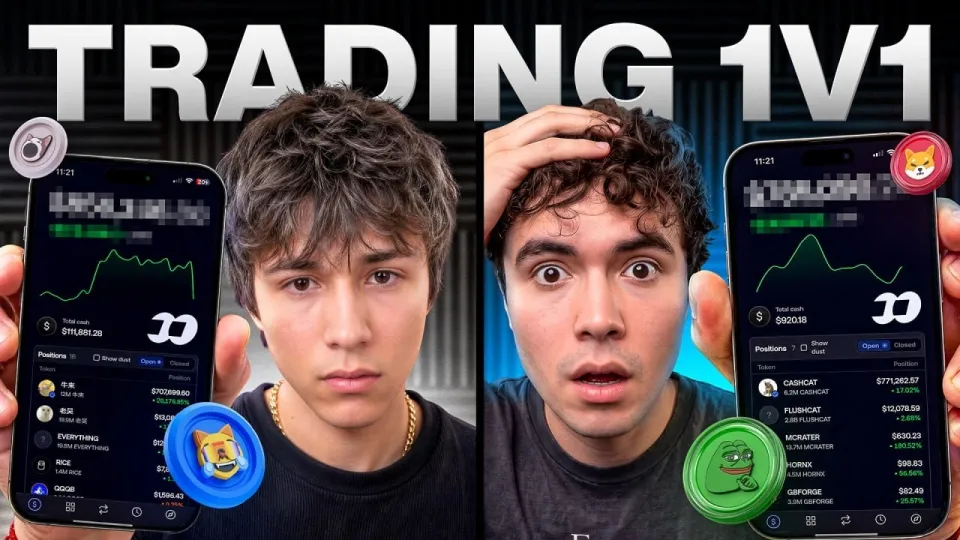
Video: I Challenged A Pro Memecoin Trader (Who Won?)
Want articles like this for your own video to promote it on YouTube and Google? Order them through the Telegram bot @sat_sit_bot. It writes articles around your video, embeds the video and publishes them on popular niche websites (no ads). Free trial — 50 articles.
· based on the channel insentos
For most people starting with a small bankroll, meme coin trading beats passive holding because short scalps cap the time your money sits exposed to rugs, liquidity pulls and sudden drawdowns. Holding only makes sense when you accept that the position can go to zero and you size it as a lottery ticket, not as savings. The practical answer is to trade meme coins with strict exits and treat any long hold as a separate, small bet.
The question comes up constantly in beginner communities, and it is the same tension that runs through the «insentos» challenge video where a guest trader works live positions while explaining his reasoning out loud. You can register and test the workflow through FOMO, the platform linked in that video, but the decisions below are what actually separate a plan from gambling.
What a meme coin actually is and why price moves so fast
A meme coin is a token whose value rests entirely on attention, community and trading flow rather than revenue or collateral. There is no earnings report and no balance sheet, so price is set purely by the order book: buyers, sellers and the market makers in between.
That structure produces three mechanics every trader should know before buying anything:
- Liquidity depth. A pool with a few thousand dollars of liquidity means a modest sell order can move price 20-40%. Thin pools are where newcomers get destroyed.
- Supply concentration. When a handful of wallets hold a large share of supply, those wallets can exit into your buy. Checking holder distribution is a two-minute task that filters most obvious traps.
- Launch mechanics. Tokens that go live on a bonding curve migrate to a decentralized exchange once a market-cap threshold is hit; the migration itself often triggers a violent repricing in both directions.
Because all three factors change minute by minute, a meme coin is a trading instrument first and an investment second. Treating it as a long-term asset is where most losses originate.
Meme coin trading versus holding: the actual trade-off
Trading wins on risk control, holding wins on effort and fees, and the right choice depends on how much time you can watch charts. A scalp lasts minutes to hours, which means your capital is only exposed while you are at the screen.
| Factor | Active trading | Holding |
|---|---|---|
| Time exposed to risk | Minutes to hours | Days to months |
| Effort | High, constant monitoring | Low after entry |
| Fee drag | Repeated swap and priority fees | One entry, one exit |
| Typical outcome | Many small results, occasional big win | Binary: large multiple or zero |
| Skill ceiling | Real, built through repetition | Minimal, mostly luck |
On Solana, where most meme coin activity happens, each swap costs network and priority fees plus slippage. A trader taking twenty round trips a day pays meaningfully more in friction than someone who buys once, so scalping only works when average wins clearly exceed that drag. If your average winner is 15% and your fees plus slippage eat 4-6% per round trip, the math gets thin fast.
Holding removes the fee problem but replaces it with tail risk. A single token can lose 80% of its value in an hour when the deployer wallet sells or the community narrative dies, and there is no stop-loss on a position you have decided to «just leave alone».
A workable scalping routine for Solana meme coins
A repeatable routine beats intuition, because meme coin trading rewards discipline far more than prediction. The sequence below is the one most consistent live traders follow, and it maps to how the guest in the insentos challenge narrates his entries while staying informative for viewers.
- Screen for fresh flow. Filter for tokens with rising volume, a healthy ratio of buyers to sellers, and a market cap that still has room to double.
- Check the contract. Verify holder distribution, whether the deployer still holds a large bag, and whether liquidity is locked or burned.
- Define the risk before entering. Decide the exact dollar amount you are willing to lose on the trade, then size the position from that number, not from how confident you feel.
- Set both exits in advance. A take-profit level and a hard stop. Traders who improvise exits give back gains in minutes.
- Take partials on the way up. Selling half at the first target removes the emotional pressure that causes revenge trading.
- Log the result. Entry reason, exit reason, and what you would repeat. Twenty logged trades teach more than two hundred unlogged ones.
Execution tools matter less than the checklist, but they do matter. Axiom (https://axiom.trade/) is the terminal featured in the video for fast charting and order routing, and it is popular precisely because speed of execution is the difference between a fill and a missed move.
Position sizing and the math that keeps small accounts alive
Survival in meme coin trading is a sizing problem before it is a picking problem. If you risk 50% of your bankroll on one token, three bad trades end the experiment; if you risk 2-5%, you can be wrong repeatedly and still be trading next week.
A simple framework for a small account:
- Risk no more than 2-5% of total capital per trade.
- Cap total exposure across all open positions at roughly 20%.
- Never average down into a losing meme coin position; the thesis either plays out quickly or it does not.
- Move profits out of the trading wallet periodically so a good week is not erased by one bad hour.
Expect the distribution of results to be lopsided. Most trades will be small losses or scratches, a few will be modest wins, and occasionally one will return several times the risk. That shape is normal, and it is why cutting losers fast matters more than being right often.
What beginners get wrong about meme coins
The most common beginner error is copying a call without understanding the entry logic behind it. By the time a token is shared in a group chat, the move that made it interesting has usually already happened, and late buyers become the exit liquidity for earlier ones.
The second error is confusing activity with edge. Watching charts all day feels productive, but without a written plan it produces overtrading, higher fees and worse decisions. A trader who takes three deliberate setups a day will typically outperform one who takes thirty reactive ones.
A third issue is access. Community and group access is often gated, invite-only or paid, and newcomers reasonably ask how to get into rooms where experienced traders talk through their reasoning. The honest answer is that most of the value is available for free if you watch recorded live sessions carefully and take notes on the decision process rather than the ticker names.
Finally, there is the influencer effect. Watching someone trade a large, well-known account does not replicate their conditions: their audience provides exit liquidity, their fee structure differs, and their losses are often invisible. Judge a strategy by whether it survives with your bankroll and your screen time.
Useful links
- FOMO registration and bonus — the platform linked in the challenge video.
- Axiom trading terminal: https://axiom.trade/
- insentos on X: https://x.com/insentos
- insentos on Instagram: https://www.instagram.com/insentos
- insentos on TikTok: https://www.tiktok.com/@insentos
Bottom line
Meme coin trading suits small accounts better than holding, because short exposure and pre-set exits limit how much a single bad token can cost you. Holding is only reasonable as a deliberately small, written-off bet on a narrative you believe in. The skills that decide the outcome are unglamorous: position sizing, checking holder distribution, taking partials and logging every trade. The «insentos» challenge video is a useful reference because it shows that reasoning happening live rather than after the fact. If you want to follow the same workflow, start with a FOMO account and paper-trade the routine before risking real capital.
Key takeaways
- Meme coins are high-volatility tokens with no cash flow, so profit comes from timing and liquidity, not fundamentals.
- Scalping suits small accounts because it limits time exposed to a rug pull or a sudden 60-80% drawdown.
- Holding a single meme coin bets on one outcome; spreading risk across several trades raises the odds of catching one winner.
- Position sizing and a pre-set exit plan matter more than entry signals when trading Solana meme coins.
- Tools like Axiom and FOMO streamline execution, but they do not remove slippage, fees or MEV risk.
Questions & answers
Is meme coin trading better than holding for a beginner?
For most beginners, trading with small positions and defined exits is the safer way to learn, because exposure lasts minutes rather than weeks. Holding a single token is a binary bet that can wipe out the position overnight. Start with tiny size, log every trade, and only hold when the amount is money you can fully afford to lose.
How much should I risk on one meme coin trade?
A common rule is 2-5% of total trading capital per position, with total open exposure capped around 20%. That lets you be wrong many times in a row without losing the ability to keep trading. Size the position from the loss you accept, not from how confident the setup feels.
Why do so many people lose money on Solana meme coins?
Thin liquidity, concentrated holder wallets and fast narrative decay mean price can collapse before a slow trader reacts. Add repeated swap and priority fees plus slippage, and a strategy with no exit plan bleeds capital quickly. Checking holder distribution and setting a hard stop before entry removes a large share of these losses.
Do I need paid tools or private groups to trade meme coins?
No. A charting and execution terminal plus a written checklist covers most of the work, and recorded live sessions teach the reasoning for free. Paid groups mainly save time on screening, and by the time a call reaches a large chat the early move is often gone. Judge any group by whether it explains entries and exits, not by ticker names.
Source: I Challenged A Pro Memecoin Trader (Who Won?) · Markdown version